

Automated Commerce
Back to Cases
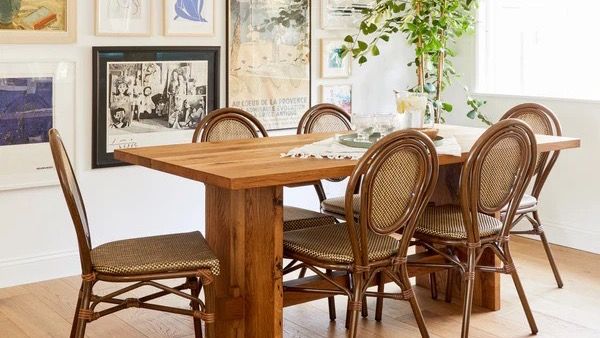
A solid oak What We Make dining table with rattan bistro chairs, in a dining room with a gallery wall

What We Make × Automated Commerce

What We Make, a made-to-order furniture workshop near Chicago and Automated Commerce's first US client, migrated 48,196 products into one canonical catalog and built a workflow that generates every finish of a piece from a single base photograph.

Max de SmitBy Max de Smit
success-storyfurnitureproduct-photography

What We Make is a solid-wood furniture workshop in Algonquin, Illinois, outside Chicago, and Automated Commerce's first client in the United States. Every table, desk, bench and storage piece is made to order in a wood, finish and size the customer chooses, which is exactly the kind of catalog that breaks a normal product page.

About What We Make

Around 20 people build What We Make's solid-wood furniture from reclaimed and sustainably sourced timber: tables, desks, benches and storage. Every piece is made to order, in custom sizes, woods and finishes. That made-to-order model is the business, not an add-on.

The challenge

Made-to-order furniture multiplies. A single table design exists in as many versions as there are combinations of wood, finish and size, and that arithmetic is how one workshop ends up with 48,196 products and 64,050 variants. Photographing every finish of every model in a studio was never realistic at that scale.

How Automated Commerce helps

Automated Commerce migrated the entire catalog into one canonical catalog with zero blockers, giving What We Make a single source of truth for every product and variant. On top of that catalog it built a finish-swap workflow: one base photograph of a piece, plus a photo of each finish swatch, produces the same piece in every finish it comes in, holding its exact shape and proportions. The workflow was verified on the Round Tapered Leg Dining Table, where a single photograph produced the piece in 8 finishes across 13 completed runs. Auto Mate runs that workflow finish by finish, so the workshop is not rebooking a studio every time a new wood option ships.

The result

The numbers, verified in production:

  • 48,196 products and 64,050 variants migrated into one canonical catalog, zero blockers.
  • 52,939 media assets and 214,353 metafields carried over intact.
  • 8 finishes generated from a single base photograph, verified on the Round Tapered Leg Dining Table across 13 completed workflow runs.
  • 47,524 listings live on the connected channel.
  • 8,490 orders synced through the same catalog.

Frequently asked questions

One base photograph of the piece plus a photo of each finish swatch produces the same piece in every finish it comes in, holding its exact shape and proportions. What We Make verified it on the Round Tapered Leg Dining Table: one photograph, 8 finishes.
What We Make's catalog runs to 48,196 products and 64,050 variants, because every wood, finish and size combination is its own entry. It migrated into one canonical catalog with zero blockers, with 52,939 media assets and 214,353 metafields carried over intact.
Yes: the finish swaps while the piece holds its exact shape and proportions, because generation starts from the real base photograph and the real swatch. What We Make verified the workflow across 13 completed runs on a single table design before rolling it further.
Auto Mate runs the workflow finish by finish, so a new wood option means another run, not another studio booking. Behind it sits one canonical catalog with 47,524 listings live on the connected channel, so the new imagery lands where customers actually buy.
Yes. What We Make has 8,490 orders synced through the same canonical catalog that holds its 48,196 products, giving the workshop one source of truth for what was sold and what it looks like, instead of splitting orders and catalog across separate systems.
Photographing every finish of every model was never realistic at 64,050 variants. The finish-swap method inverts it: the studio captures each piece once, and generation covers the combinations. Made-to-order stops being the reason the product pages stay incomplete.

Stay Ahead: Newsletter

Get the latest insights from the AI-industry and updates on new platform features

What We Make × Automated Commerce - Automated Commerce